By the holidaysaudi.com team · Updated 8 September 2026
Since September 2019, Saudi Arabia has issued tourist visas online, and for most visitors the process is now quick and simple. You fill in a form on the official portal, pay by card and, in many cases, receive the visa by email within minutes. This guide explains who can apply, what it costs, what is included and the rules worth knowing before you travel. Rules and fees can change at short notice, so always check the official portal before you pay. For a summary of every entry route, see our visa page.
Who can get a Saudi eVisa?
The tourist eVisa is open to citizens of around 66 countries, including the United States, Canada, the member states of the European Union, Australia, New Zealand, Japan, South Korea and several Caribbean and Asian countries. The list changes from time to time, so check your nationality on visa.visitsaudi.com before you plan anything.
Two other groups can also use the eVisa or a visa on arrival:
- Residents of the GCC (Bahrain, Kuwait, Oman, Qatar and the UAE) with a valid residence permit, whatever their nationality. GCC citizens need no visa at all.
- Holders of a valid US, UK or Schengen visa that has been used at least once, as well as permanent residents of those countries. Many of them can get a visa on arrival or apply online even if their own nationality is not on the list.
How much does the eVisa cost?
When applying online, the total is around SAR 535 (roughly USD 143 or EUR 130). This single payment covers the visa fee, the mandatory medical insurance and VAT. A visa on arrival at the airport is usually a little cheaper, at around SAR 480, but you then depend on kiosks and queues after a long flight. Prices are set in riyals, so the amount on your card will vary with the exchange rate.
| Item | Details |
|---|---|
| Validity | One year from the date of issue |
| Entries | Multiple |
| Maximum stay | Up to 90 days per visit (check the total allowed per year on your visa) |
| Cost online | Around SAR 535, medical insurance and VAT included |
| Processing | Often minutes, occasionally a few days |
| Allowed | Tourism, visiting family and friends, events, Umrah outside the Hajj season |
| Not allowed | Work, study, Hajj |
Be wary of look-alike websites. Many private agencies sell the same visa for a much higher price, sometimes with "express" processing that adds nothing. The official portal is visa.visitsaudi.com.
How to apply, step by step
- Check your passport. It must be valid for at least six months from your arrival date and have a free page.
- Create an account on visa.visitsaudi.com and choose the tourist visa.
- Fill in your details: personal information, passport data, an address in Saudi Arabia (your first hotel is fine) and your planned arrival date.
- Upload a photo with a plain, light background and a scan of your passport photo page.
- Pay by credit or debit card. The insurance is added automatically.
- Receive the visa by email as a PDF. Save it on your phone and print a copy; airlines often ask to see it at check-in.
Insurance: what is included
The insurance bundled with the eVisa is medical cover from a Saudi-regulated insurer, activated when you enter the country. It covers emergency treatment up to around SAR 100,000. It does not cover cancellations, lost luggage, delays or medical repatriation in all cases, and treatment in private hospitals can be expensive. That is why many travellers add their own policy: compare options on VisitorsCoverage and see our travel insurance guide. Read the small print on government travel advice: with the warnings issued for Saudi Arabia in October 2026, some policies may not cover you if you travel against official advice.
Rules to know
- Umrah: Muslims can perform Umrah on the tourist eVisa outside the Hajj season, after booking a permit through the official Nusuk app or nusuk.sa. Hajj requires a separate Hajj visa.
- Makkah and Madinah: non-Muslims may not enter Makkah. Madinah is open to all, apart from the central area around the Prophet's Mosque.
- Overstaying leads to fines and possible bans, so keep an eye on your stay counter.
- Overland: if you plan to arrive by road, for example over the causeway from Bahrain, check that your visa allows land entry.
- Customs: alcohol, pork products and drugs are prohibited. Bring prescription medicines in their original packaging with a copy of the prescription.
After you land
At immigration your fingerprints and photo are taken. Then sort out the essentials: a SIM or eSIM (an Airalo eSIM can be installed before you fly), cash for small purchases and a ride into town; see airport transfers. Planning the rest of your trip? Our 10-day itinerary is a good place to start.
Plan your Saudi trip
Visa, hotels, tours and transport in one place.
Frequently asked questions
How long does the Saudi eVisa take?
Many applications are approved within minutes, but some take a few days. Apply at least a week before you fly to be safe, and longer if your plans depend on it.
Is health insurance included in the Saudi eVisa?
Yes. The fee of around SAR 535 includes mandatory medical insurance from a Saudi insurer for emergency treatment. It does not cover cancellations or lost luggage, so many travellers add their own travel insurance.
Can I perform Umrah on a tourist eVisa?
Yes, Muslims can perform Umrah on the tourist eVisa outside the Hajj season, after booking a permit through the Nusuk platform. Hajj requires a separate Hajj visa.
Do British citizens need the eVisa?
British citizens can choose between the tourist eVisa and the Electronic Travel Authorisation (ETA) introduced on 1 July 2026. The ETA allows up to 180 days in total but does not include health insurance.
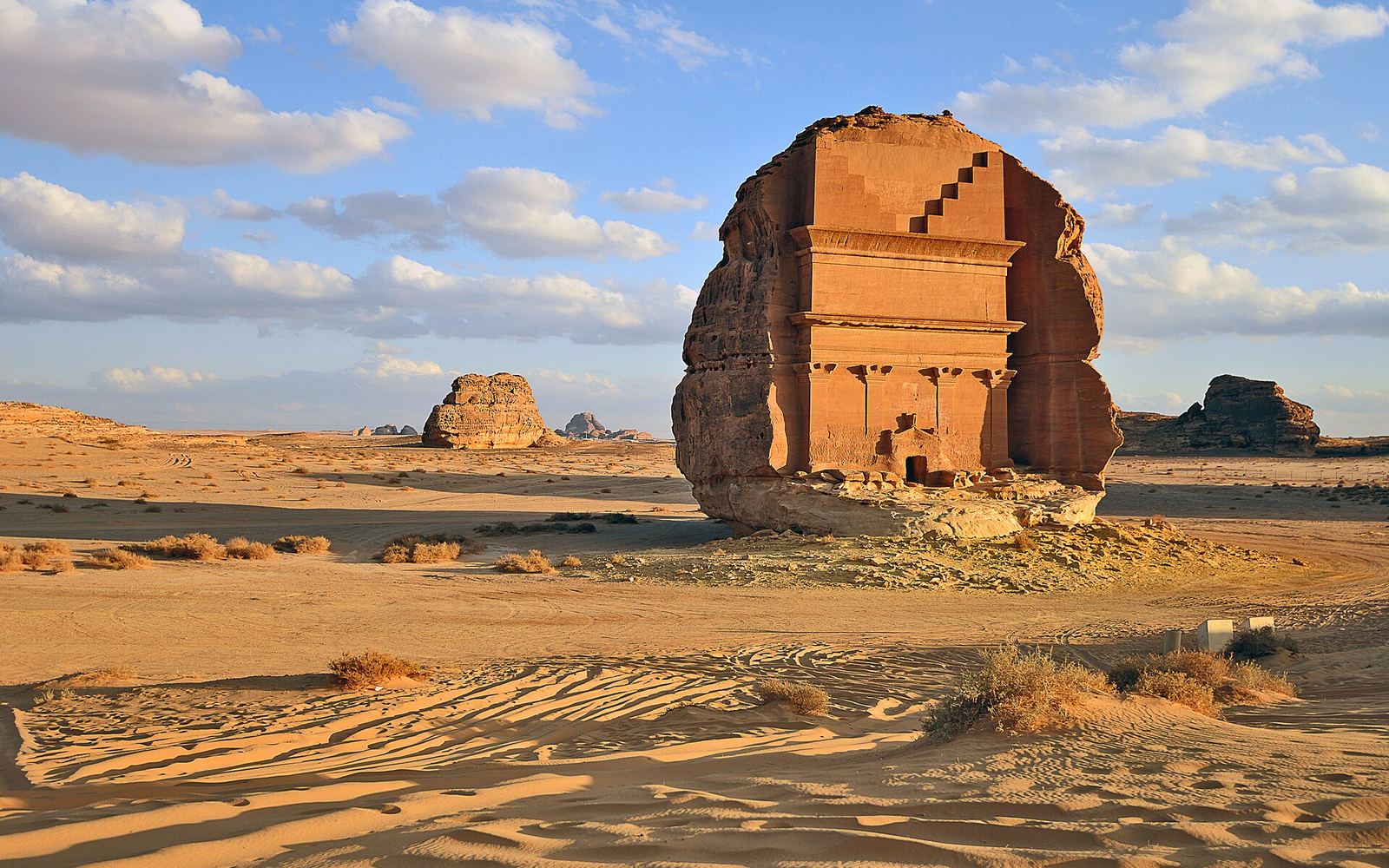
Header photo: Photo: Tahir mq, CC BY-SA 4.0
Some links on this page are affiliate links. If you book through them we may earn a small commission at no extra cost to you. Learn more.