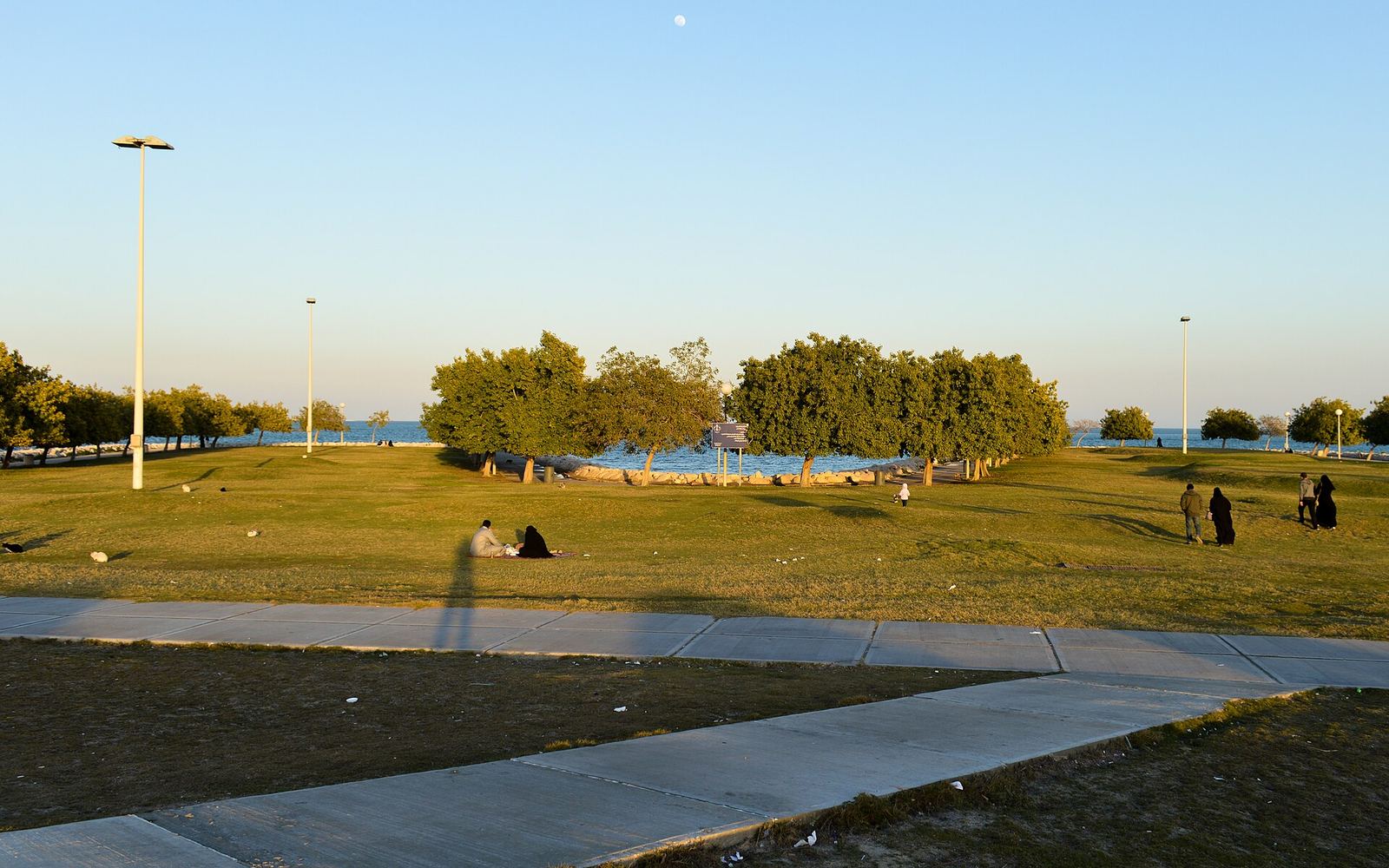
- AreaEastern Province, Arabian Gulf coast
- Best forCulture, waterfronts, seafood, a hop to Bahrain
- Time1–3 days
- TipAllow extra time at the causeway at weekends
The Dammam metropolitan area, which includes Dammam, Al Khobar and Dhahran, is where modern Saudi Arabia's oil story began. In 1938 the Dammam No. 7 well in Dhahran struck oil in commercial quantities, transforming a coastline of fishing and pearling villages into the hub of the global energy industry. Today the area is relaxed, international and family-friendly, with long waterfronts, malls and a busy food scene, and it makes an easy base for Al-Ahsa and Bahrain.
Ithra, the cultural landmark
The King Abdulaziz Center for World Culture, known as Ithra, is the region's must-see. Its stacked, pebble-like towers in Dhahran house a museum, library, cinema, theatre and exhibition halls, with a programme of shows, workshops and festivals throughout the year. It stands next to the historic Well No. 7, which you can see on the grounds. Check the Ithra website for exhibition times and tickets; some galleries are free, others require booking.
Corniches and beaches
The Al Khobar Corniche is a long seaside promenade with parks, cafés and views over the Gulf, busiest after sunset when families come out for picnics. Nearby, the Khobar Water Tower is a well-known landmark. Dammam has its own corniche and a modern waterfront district. About 40–50 minutes south, Half Moon Bay (Shatee Nisf Al Qamar) has calm, shallow water and beach resorts, popular at weekends. For a quieter outing, Tarout Island, linked by causeway, has an old fort and one of the longest histories of settlement in the Gulf.
Food and shopping
The Eastern Province is great for Gulf seafood, from grilled hamour to spiced shrimp, as well as international restaurants catering to a large expatriate community. Al Khobar's Prince Turki Street and the corniche area are lined with cafés. Big malls offer air-conditioned shopping during the hottest months. See our food guide for dishes to try.
Over the causeway to Bahrain
The 25-km King Fahd Causeway, opened in 1986, links Al Khobar with Bahrain via a series of bridges and an artificial island where border formalities take place. On a quiet day you can be in Manama in about an hour; on Thursday and Friday evenings queues can be long. You will need the right Bahraini entry permission and a Saudi visa that allows you to return. Our Bahrain from Saudi Arabia guide explains the details.
Getting there and staying
King Fahd International Airport (DMM), one of the largest airports in the world by land area, has domestic and international flights; it is around 45–60 minutes from Al Khobar by road, see airport transfers. SAR trains run from Riyadh to Dammam in roughly four hours, stopping at Al-Ahsa. To explore beaches and Tarout, compare car hire. Al Khobar is the most convenient base for visitors, with hotels near the corniche: compare Al Khobar hotels.
How long to stay
One day covers Ithra and the corniche; two days add Half Moon Bay and Tarout Island, and a third day leaves time for a trip to Bahrain or the Al-Ahsa oasis.
Tours: Dammam and Al Khobar
Compare guided trips, transfers and tickets.
Frequently asked questions
Is Al Khobar or Dammam better for tourists?
Al Khobar is usually the better base, with the corniche, many hotels and restaurants, and quick access to Ithra in Dhahran and the King Fahd Causeway.
How long does it take to drive from Al Khobar to Bahrain?
Without queues, about an hour to central Manama over the King Fahd Causeway. At weekends and holidays allow considerably more time for the border.
What is Ithra?
The King Abdulaziz Center for World Culture in Dhahran, a landmark building with a museum, library, cinema, theatre and exhibitions, next to the well where oil was first found in commercial quantities in 1938.
Some links on this page are affiliate links. If you book through them we may earn a small commission at no extra cost to you. Learn more.