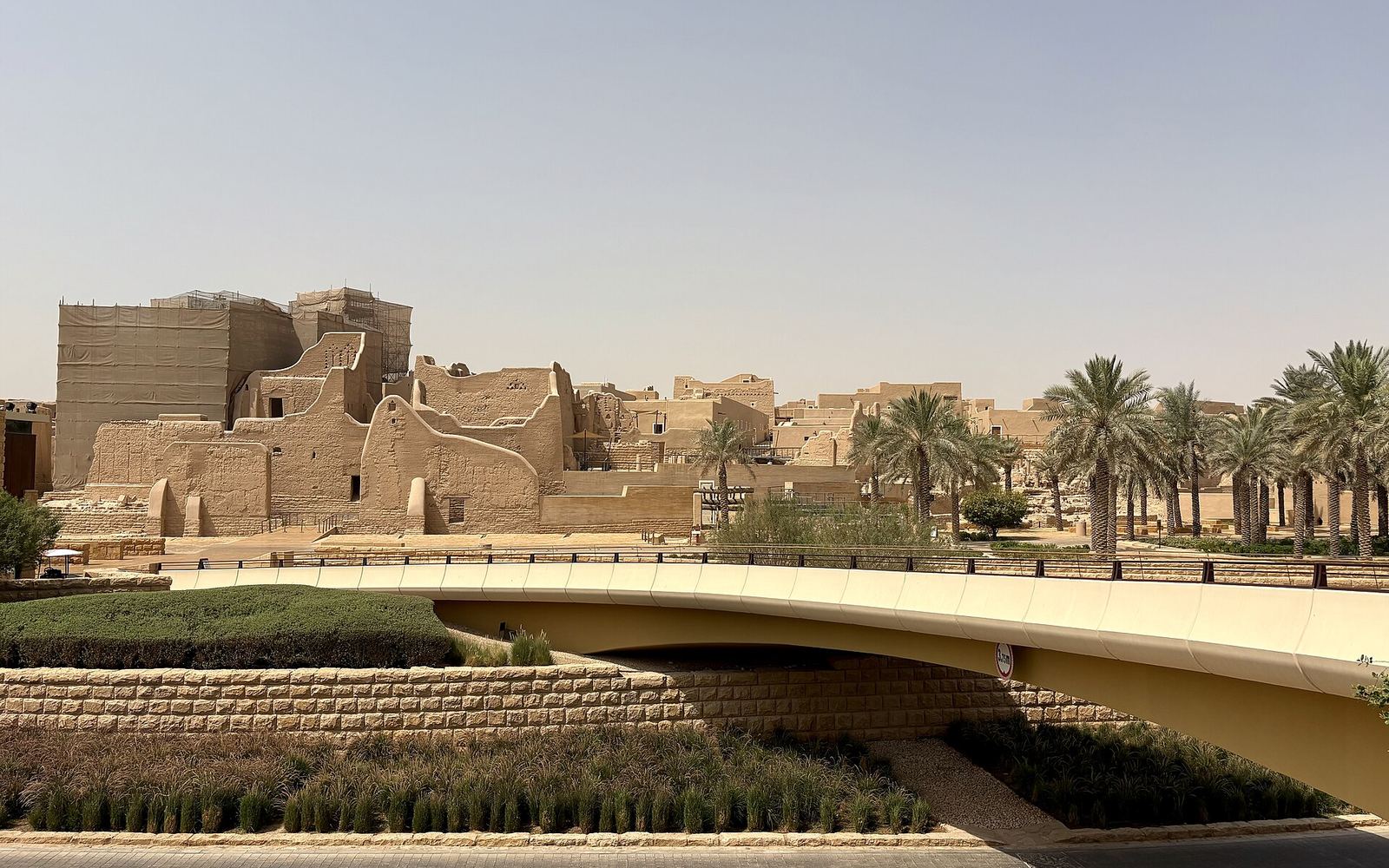
- AreaDiriyah, north-west Riyadh
- Best forHistory, architecture, evening walks
- Time2–3 h, more with dinner at Bujairi
- TicketsVaries by season; check diriyah.sa
Long before Riyadh became a capital of skyscrapers, the centre of power in central Arabia was a walled town of mudbrick palaces on the edge of Wadi Hanifah. At-Turaif, in Diriyah, was the seat of the House of Saud and the capital of the First Saudi State from the 18th century until 1818, when an Ottoman-Egyptian army besieged and largely destroyed it. The ruins were left to the desert for nearly two centuries.
UNESCO inscribed the At-Turaif District as a World Heritage Site in 2010, recognising it as an outstanding example of Najdi architecture. After years of restoration it reopened to visitors in 2022, and it is now the historic heart of a much larger development that includes Bujairi Terrace, a cluster of restaurants facing the old town across the wadi.
What to see
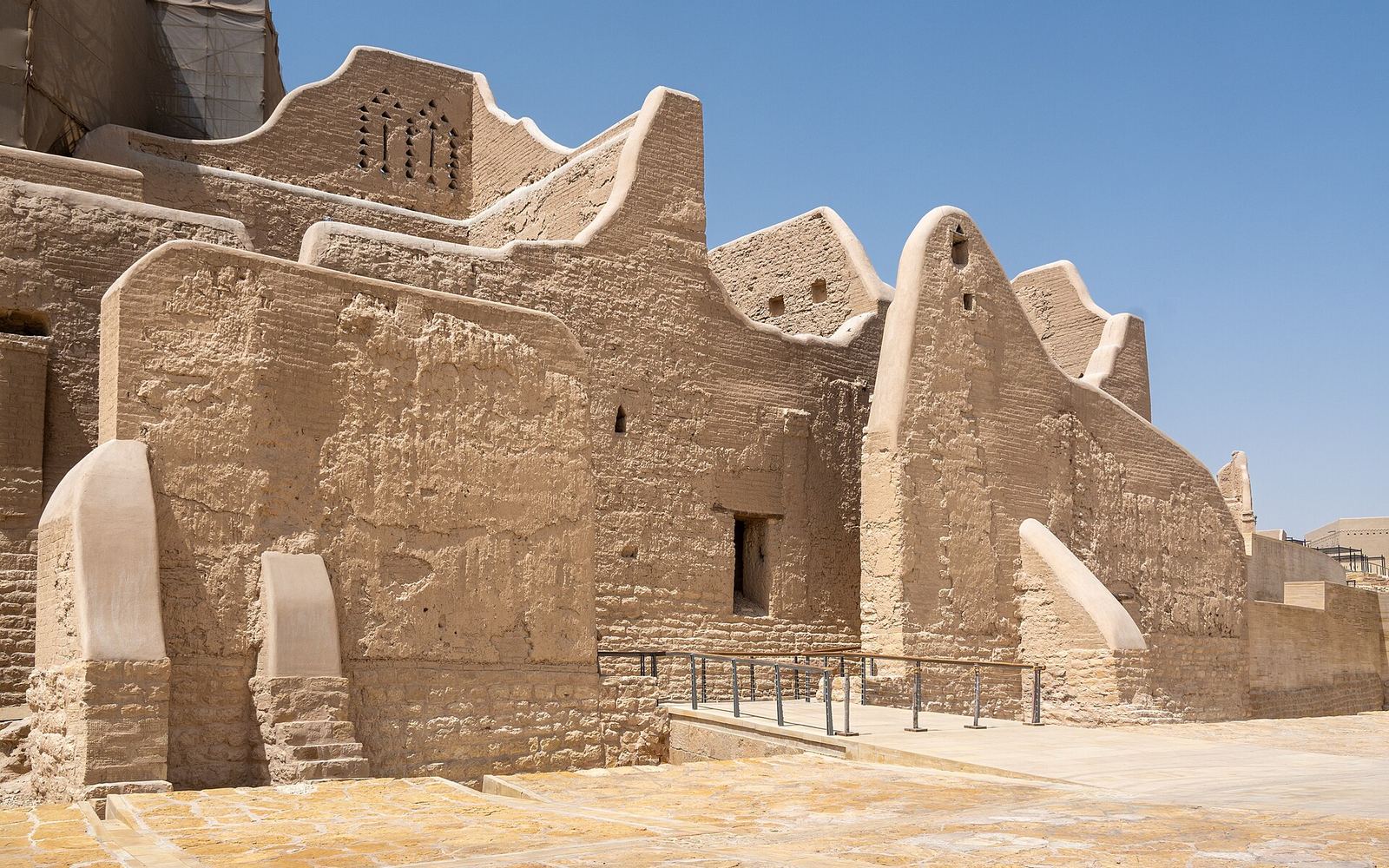
- Salwa Palace: the largest complex in At-Turaif and the seat of government in the First Saudi State, with towering walls and triangular openings typical of Najdi building.
- Imam Mohammad bin Saud Mosque: the main mosque of the district, rebuilt in traditional style.
- The lanes and gates: the pleasure here is in wandering narrow alleys between restored houses, watchtowers and courtyards.
- Galleries and museums: several restored buildings hold small exhibitions on Diriyah's history, daily life and traditional architecture.
Opening hours and tickets
At-Turaif's hours and ticketing change with the season. In recent periods it has opened from the late afternoon until midnight, with last entry an hour or so before closing; at other times it opens from mid-morning, with shorter hours on Fridays. Entry has sometimes required a Diriyah access pass, whose value could often be redeemed at Bujairi Terrace restaurants, and between May and September 2026 access was free. Book and check current conditions on the official Diriyah website before you go.
Getting there
Diriyah is around 20 to 30 minutes by car from Olaya and central Riyadh, depending on traffic. Taxis and ride-hailing apps are the easiest option; there is paid parking near Bujairi and Samhan, and valet at busy times. A guided visit adds a lot of context to the ruins: compare tours on GetYourGuide or Viator, many of which include tickets and transport. Our getting around guide covers ride-hailing, the metro and driving in the city.
Combine it with
Most visitors pair At-Turaif with dinner at Bujairi Terrace or a walk along the landscaped Wadi Hanifah below, which is free and open throughout the day. In Riyadh's old centre, Masmak Fort and the National Museum tell the next chapter of the story, from the Second Saudi State to the founding of the modern kingdom. For a day out in the desert, the cliffs of the Edge of the World are about two hours away. To stay close to the heritage district, search Booking.com for hotels in Diriyah and western Riyadh.
Tours: At-Turaif, Diriyah
Compare guided trips, transfers and tickets.
Frequently asked questions
Is At-Turaif open to visitors?
Yes. After a long restoration, At-Turaif reopened to the public in 2022. Hours and ticket rules change with the season, so check diriyah.sa before you go.
Do I need a ticket for At-Turaif?
It depends on the season. At times entry has needed a Diriyah access pass (often redeemable at Bujairi restaurants), while access was free between May and September 2026. Check the official site.
How long should I spend at At-Turaif?
Allow two to three hours for the district, and longer if you plan to have dinner at Bujairi Terrace afterwards.
Some links on this page are affiliate links. If you book through them we may earn a small commission at no extra cost to you. Learn more.